What Is The Smallest Bra Size? Is There Any Size Below A?
by Paulette Leaphart
Have you ever walked through the lingerie section and left empty-handed because nothing seemed to go small enough? If you're searching for the smallest bra cup size, you deserve a real answer — and it goes further down the alphabet than most stores will show you. The smallest cup size that exists in the standard bra sizing system is AAA, followed by AA and then A. Most mainstream retailers start at AA at the absolute minimum, with A being the most commonly stocked "small" option. For anyone focused on wellness and body-positive lifestyle choices, getting your bra size right is one of the most practical, impactful things you can do for your daily comfort and confidence.
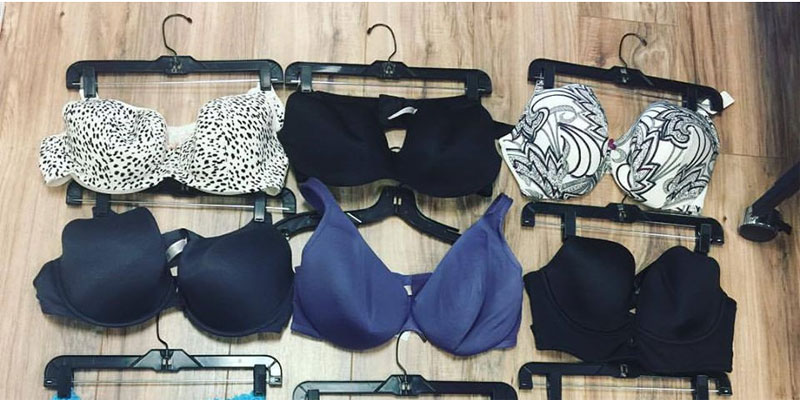
Bra sizing confuses almost everyone, and that confusion is worse at the smaller end of the spectrum where options are already limited in stores. The number-letter combination on every tag isn't random — it's a system built around two specific body measurements — but because nobody explains it clearly, most people guess their way through fitting rooms for years. Here's the truth: A cup is the third-smallest cup in the standard sizing system, not the first. There are legitimate sizes below it, worn by real people every day, and finding them takes knowing where to look and what to ask for.
This guide covers everything you need: how the cup sizing system is structured, what the smallest options actually are, who wears them and why it matters, and how to find the right fit without the usual frustration. Whether you're shopping for yourself, helping someone you care about, or navigating a changed body after breast surgery, this is the clear walkthrough you've been looking for.
Contents
- Understanding Bra Sizing: Where It All Starts
- The Smallest Bra Cup Sizes Compared Side by Side
- Myths About Small Bra Cup Sizes, Debunked
- Who Wears the Smallest Bra Cup Size — and When It Matters
- Shopping for Small Sizes: What Beginners Get Wrong
- Simple Tricks That Improve Your Fit Right Now
- How Small Cup Sizes Show Up in Real Life
- Next Steps
Understanding Bra Sizing: Where It All Starts
Before you can pinpoint the smallest bra cup size that works for your body, it helps to understand how the entire measurement system is structured. Once you see the logic behind it, you can troubleshoot any fit problem you encounter — not just the ones covered in this post. The system isn't complicated. It just requires someone to explain it clearly, which most fitting room tags and lingerie websites fail to do.
Band Size vs. Cup Size
The number on your bra label — 28, 30, 32, 34, and so on — is your band size. You find it by measuring the circumference of your rib cage directly underneath your bust, then rounding to the nearest even number. That measurement determines how long the band of your bra needs to be to sit snugly and do its job. The letter — A, B, C, D, and beyond — is your cup size. Here's the part that trips most people up: cup size is not a fixed volume. It's a relative number. It represents the difference between your full bust measurement and your band measurement. A 34A and a 32A share the same letter, but they're genuinely different cup volumes — something most shoppers never realize until they've spent years buying the wrong size.
How Cup Letters Are Assigned
Each inch of difference between your bust measurement and your band measurement corresponds to one cup letter in the standard system. The breakdown works like this: a difference of roughly half an inch or less is typically classified as AA, and some sizing systems extend to AAA for differences of less than a quarter inch. A one-inch difference is an A cup. Two inches is B. Three is C, and so on up the alphabet. The standardized bra sizing system was formalized in the mid-twentieth century, though it's applied with meaningful variation across different countries and manufacturers — which explains why you can be a perfect fit in one brand's 32A and swim in another's version of the same tag.

The Smallest Bra Cup Sizes Compared Side by Side
Now that you understand how the system works, let's get specific about what the smallest bra cup size options actually look like in practice. If you've been shopping the smaller end of the cup range and consistently coming up short, you're dealing with a stocking problem at most retailers — not a problem with your size. The sizes you need exist. Here's exactly how the three smallest standard cup sizes compare.
AAA, AA, and A at a Glance
Understanding the practical difference between AAA, AA, and A helps you shop with accuracy and set realistic expectations for what you'll find in different retail environments. This table lays it out plainly:
| Cup Size | Measurement Difference | Mainstream Availability | Typical Fit Profile |
|---|---|---|---|
| AAA | Less than ½ inch | Specialty boutiques and online retailers only | Minimal breast tissue, post-mastectomy, very petite frames |
| AA | ½ to 1 inch | Select mainstream brands; widely available online | Small natural bust, younger women, petite and athletic builds |
| A | About 1 inch | Stocked across almost all retailers | Small to average bust across all body types and ages |
Shopping in the AAA or AA range almost always means going beyond the department store floor. Specialty lingerie retailers like Lula Lu, Barely B, and Natori carry these sizes with thoughtful construction that actually fits the proportions of a smaller bust. If you're curious how the size spectrum looks from the opposite end, our guide on what the largest bra size actually is illustrates just how wide the full range gets — and the same sizing logic applies in both directions.
Sister Sizes and How They Work
Sister sizes are one of the most practically useful concepts in bra shopping, and one of the least talked about. Bras that share the same cup volume but use different band sizes are called sister sizes. If your calculated size is 32AA but it isn't in stock, a 30A offers nearly the same cup volume with a slightly shorter band. The logic is simple: drop one band size and go up one cup letter, or go up one band size and drop one cup letter, and the cup volume stays roughly equivalent. Knowing your sister sizes effectively multiplies the number of bras you can realistically try on — which is a real advantage when shopping in a cup range that isn't fully stocked everywhere. Write your main size and its two sister sizes on your phone. You'll use this constantly.
Myths About Small Bra Cup Sizes, Debunked
Misinformation about small cup sizes is surprisingly persistent. These myths affect how people shop, how they feel about their bodies, and the practical decisions they make about support and style. Let's knock the two most damaging ones down clearly so you can move forward with accurate information.
Myth: A Is Always the Smallest Cup
Walk into almost any mainstream lingerie department and A appears to be the starting point — the floor of the range, the smallest option displayed. But in the actual sizing system, A is the third-smallest cup. AA is smaller, and AAA is smaller still. The reason you don't see smaller cups on most racks has nothing to do with how many people need them. It's a volume and stocking decision. Retailers carry the sizes that move the most units, and smaller cup sizes have been historically underordered and underrepresented. If a store associate has ever told you there's nothing smaller than A, that's a reflection of their inventory, not of what exists. Smaller cups are real sizes worn by millions of people, and they're available — just not always on the floor in front of you.
Myth: Small Cups Don't Need Real Support
This assumption causes real problems. The idea that small-busted people don't need bra support because they don't have "enough" tissue misunderstands what bras actually do. Support isn't only about lifting weight — it's about reducing movement, preventing skin-on-skin friction, protecting sensitive or healing skin, and maintaining posture throughout the day. People with smaller busts experience all of these needs equally. Cancer survivors with reduced breast tissue after surgery, women with sensitive skin, and anyone healing from a procedure particularly benefit from a well-fitting bra that stays in place without irritating. While we're on the topic of bra health, our evidence-based post on whether bras cause breast cancer addresses a question that comes up often and deserves a factual answer rather than guesswork.
Pro tip: If the center panel of your bra — the small piece of fabric between the two cups — isn't lying flat against your sternum, your cups are too small, even if they're not visibly overflowing.

Who Wears the Smallest Bra Cup Size — and When It Matters
Smaller cup sizes aren't niche or unusual. They're worn by a wide range of people across every age and body type. Understanding who actually wears these sizes — and in what circumstances — makes it easier to find the right products, the right brand resources, and the community that understands your specific needs.
Young Women, Petite Frames, and Natural Body Variation
Many women naturally have minimal breast tissue regardless of overall weight or height. Petite frames, athletic body types, and certain genetic body compositions consistently result in bust measurements that fall into the AA or AAA cup range. Young women in early development stages may also wear these sizes for a period before their measurements shift. None of this is unusual or anything to work around. The smallest bra cup size is a legitimate, everyday size worn by millions of people worldwide — not a curiosity or an edge case. It's also worth remembering that breast size shifts throughout life in response to hormonal cycles, weight changes, pregnancy, and surgical procedures. The size that fits you now may differ from the one you need in a few years, which is exactly why re-measuring periodically matters.
Cancer Survivors and Post-Mastectomy Needs
This topic sits at the core of what The Scar Story is about. Breast cancer survivors who've had partial or full mastectomies frequently find themselves navigating much smaller cup sizes after surgery — sometimes AA, sometimes AAA, sometimes exploring options specifically designed for flat or asymmetrical chests. Finding lingerie that works on a post-surgical body involves both practical and emotional dimensions, and both of them are completely valid. Many survivors benefit from mastectomy-specific bras, which feature internal pockets for prosthetics and are often constructed in AA and smaller cups using softer, skin-friendly fabrics. Other survivors find that going bra-free is the most comfortable choice, particularly during recovery. If that's a decision you're weighing, our post on the pros and cons of not wearing a bra gives you an honest, balanced view of what that choice involves day-to-day.
Shopping for Small Sizes: What Beginners Get Wrong (and Experts Do Right)
Shopping for the smallest bra cup sizes requires a slightly different strategy than shopping the mainstream range. The good news is that once you know what to look for — and where to look — the whole process becomes far more manageable. Here's where most people stumble, and what the experienced approach looks like.
Common Beginner Mistakes
The most common mistake is measuring yourself once and treating that number as permanent. Bodies change, and so does bra fit — as bras stretch with regular wear, as weight fluctuates, as hormonal shifts and life events move things around. A measurement from a year ago may no longer be accurate today. Buying whatever's in stock instead of what actually fits is the second-biggest error. Wearing a B cup because the store didn't carry AA doesn't solve your problem; it creates new ones. Cups that fold and gap, a band that rides up your back, straps that fall off your shoulders — these are all symptoms of the wrong size. A third mistake is avoiding professional fittings out of embarrassment about where your measurements land. Professional bra fitters have measured every size and body type imaginable. Getting measured by a trained fitter at least once gives you a reliable baseline to shop from confidently, in stores and online.
What Experienced Shoppers Do Differently
Experienced small-cup shoppers measure themselves every six months, or whenever they notice their current bras fitting differently than they used to. They know their sister sizes by heart and use them as backup whenever their primary size isn't in stock. They start wearing a new bra on the tightest hook — because bands stretch over time, and you want room to adjust tighter as weeks pass. They also shop by brand rather than by store: Natori, Wacoal, Lula Lu, Calvin Klein, and True&Co are names consistently recommended for smaller cup shoppers because they design for the proportions of these sizes rather than just shrinking down a larger pattern. When it comes to occasion-specific styles, strapless bras in small cups can be tricky — but our guide to the best strapless bras identifies which designs hold their position on smaller frames without slipping or bunching throughout the day.
Simple Tricks That Improve Your Fit Right Now
You don't need a boutique fitting appointment to get meaningfully better results from your bra starting today. A few targeted checks and smart style choices can make an immediate difference. Here's what to do right now if you suspect your current bra isn't working the way it should be.
The At-Home Fit Check
Three things tell you almost everything about whether your bra actually fits. Run through these while wearing the bra you have on right now:
- The center panel: The small piece of fabric between the cups should lie completely flat against your sternum. If it pulls away or floats even slightly, your cups are too small — this applies even in the smallest cup sizes.
- The back band: Slide two fingers under the band at the back. You should fit exactly two fingers with mild resistance. If three or four slide in easily, your band is too loose and doing none of the support work it should.
- The straps: They should sit snugly on your shoulders without digging in. If they're the only thing stopping your bra from sliding down your body, your band is too loose and the straps are compensating — which leads to shoulder pain over time.
Best Bra Styles for Small Cup Sizes
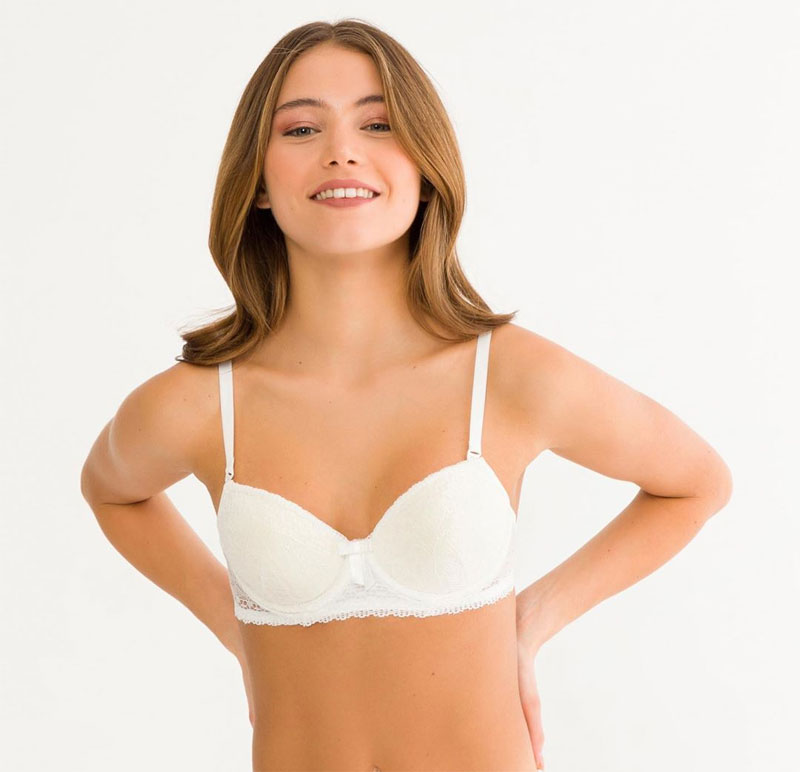
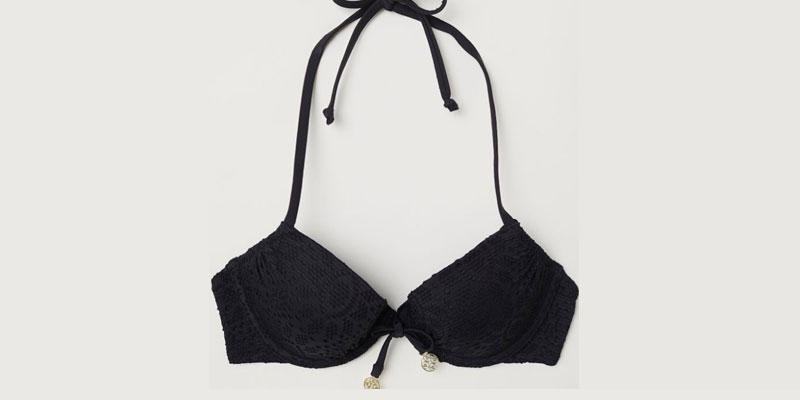
Bralettes are genuinely built for AA and AAA cups. They prioritize soft coverage and minimal structure, which suits small-cup frames naturally. Many use stretch lace or knit fabrics that lie smoothly against the chest without gaping, poking, or creating visible lines. Wireless bras are another excellent option for smaller busts — our guide to the best wireless support bras covers styles that work beautifully across the small cup range and provide a gentle, consistent hold without underwire discomfort. Push-up styles work well in small cups too, adding definition under fitted tops without feeling overstuffed. Triangle bralettes without padding give a clean minimalist silhouette that looks effortless on smaller frames. The style that consistently performs worst for small cup shoppers is the heavily molded T-shirt bra — unless it's fitted with precision, the rigid cup tends to create visible gaps and shadows under clothing that defeat the purpose of wearing it.
How Small Cup Sizes Show Up in Real Life
The smallest bra cup size isn't a limitation to work around. Once you stop fighting your measurements and start working with them, a whole range of style possibilities and everyday comfort benefits open up that weren't accessible when you were making do with the wrong size. Here's what that actually looks like.
Style and Fashion Confidence
One of the genuinely underrated advantages of having a smaller bust is the breadth of fashion styles that become available to you. Backless dresses, halter necklines, plunging V-cuts, structured bodices, and sheer fabrics all tend to drape beautifully on smaller-busted frames. You can use fashion tape or adhesive bras in outfits that can't accommodate traditional straps. You can go braless comfortably in more situations without the physical discomfort or self-consciousness that often accompanies larger busts. Dressing for the body you actually have — rather than the one the fashion industry decided was the standard — is where real style confidence comes from. Your smallest bra cup size opens wardrobe options. It doesn't close them. When you find the styles that work with your frame, everything feels and looks more intentional.
Wellness, Comfort, and Body Confidence
The wellness payoff of a correctly fitting bra is consistently underestimated. Wearing your actual size reduces skin irritation, eliminates the strap marks that come from bands working too hard, supports better posture throughout the day, and removes the low-grade constant distraction of a bra that shifts, rides, or pokes. For cancer survivors healing from breast surgery, a properly fitted, soft bra or bralette can make a meaningful difference in both skin health and daily comfort during recovery and beyond. Body confidence is also a wellness outcome — a real, measurable one. Knowing precisely what your size is, understanding where to find bras designed for it, and recognizing that your body is a normal body with a legitimate, real size changes the way you carry yourself. That kind of grounded confidence ripples outward into how you dress, how you feel in your own skin, and how you move through the world every single day.
Next Steps
- Measure yourself today with a soft tape measure. Take your band measurement (around your rib cage, under your bust) and your bust measurement (around the fullest point of your chest). Subtract band from bust to identify your cup letter. Write both numbers down somewhere you'll actually find them.
- Calculate your sister sizes and save them on your phone. Once you have your primary size, note the two sister sizes on either side — one band size up with one cup down, and one band size down with one cup up. You'll use this list every time your primary size is out of stock.
- Shop specialty retailers for AA and AAA cups. Visit Lula Lu, Natori, Bare Necessities, or True&Co online and filter specifically by your band and cup size. Don't browse the general rack — go straight to your size filter where smaller cups are actually stocked and designed properly.
- Book a professional fitting at a lingerie boutique. Most offer complimentary fittings. A trained fitter who regularly works with smaller cup sizes gives you a precise, accurate baseline that makes every future purchase — online or in-store — significantly easier.
- Run the three-point fit check on every bra you own right now. Center panel flat against the sternum. Two fingers in the back band with mild resistance. Straps snug but not doing all the work. Any bra that fails these checks isn't your size, no matter what the tag says — set it aside and replace it with one that actually fits.



About Paulette Leaphart
Paulette Leaphart is a breast cancer awareness advocate and writer whose personal journey through diagnosis, treatment, and recovery shapes everything published on this platform. After experiencing the physical and emotional toll of breast cancer firsthand, she dedicated herself to creating a space where women can find honest information, community, and encouragement — covering beauty and personal care for people navigating treatment, fashion and style resources for survivors, and wellness content rooted in real lived experience rather than clinical distance.
About the Author

It's me Emily MacKenzie tried to make a documentary film about breast cancer according to the experience of Paulette Leaphart. Now it is no longer possible for some reason. But I'm not disappointed and I'm very hopeful that I can do something very positive that brings awareness to the women of the devastating disease ''Breast cancer". Just stay with me and keep supporting this platform; you will get update time to time and can know everything about ''Breast Cancer''.
You can get FREE Gifts. Or latest Free phones here.
Disable Ad block to reveal all the info. Once done, hit a button below