The answer to how to keep strapless bra up all day comes down to three things: the right band size, the right skin prep, and a few targeted techniques. Most strapless bras don't fail because they're poorly made — they fail because the fit is off. Fix the fit and you fix the problem. For more confidence-boosting style and body care guidance, explore the wellness and lifestyle section.

Whether you're wearing a strapless dress to a wedding, a backless top on a night out, or an off-shoulder style on a summer afternoon, you shouldn't be spending the evening tugging your bra back into place. That's a fixable problem — not a fact of life.
This guide covers why strapless bras fall, how to choose one that actually works for your body, and exactly what to do to keep yours in place from morning to night. No safety pins required.
Contents
Why Strapless Bras Fall Down
Before you can solve the problem, you need to understand what's causing it. A strapless bra has no straps to anchor it to your shoulders, which means the band and cups carry 100% of the responsibility. When either element isn't working properly, the bra slides. That's not a design flaw — it's physics.
The Physics of Support Without Straps
In a regular bra, the band handles roughly 80% of the support load and straps handle the other 20%. Remove the straps entirely and the band must carry everything. A slightly loose band you might not notice on a regular bra — because straps compensate — will absolutely fail on a strapless style.
According to Wikipedia's overview of brassiere construction, the underwire and band are the primary structural elements in a strapless bra. The silicone grip strips sewn inside the band edge are your main tool for friction. If those strips are worn smooth from too many machine washes, or if your skin is freshly moisturized and slippery, you lose the grip entirely.
How Body Shape Affects the Fit
Your body shape directly affects how a strapless bra performs. If your ribcage tapers quickly from bust to waist, the band has a narrower surface to grip. Larger cup sizes mean more weight for the band to hold without help. Both factors demand a more precise fit.
The most common reasons strapless bras fall down:
- Band size too large — the single most frequent mistake
- Cups too small, causing the bra to shift forward and downward
- Silicone grip strips worn smooth from repeated machine washing
- Freshly moisturized skin that eliminates friction under the band
- Slippery bra fabric against the inside of a dress or top
If you notice similar fit problems with regular bras, the guide on why bra straps fall down covers overlapping sizing principles worth reading alongside this one.
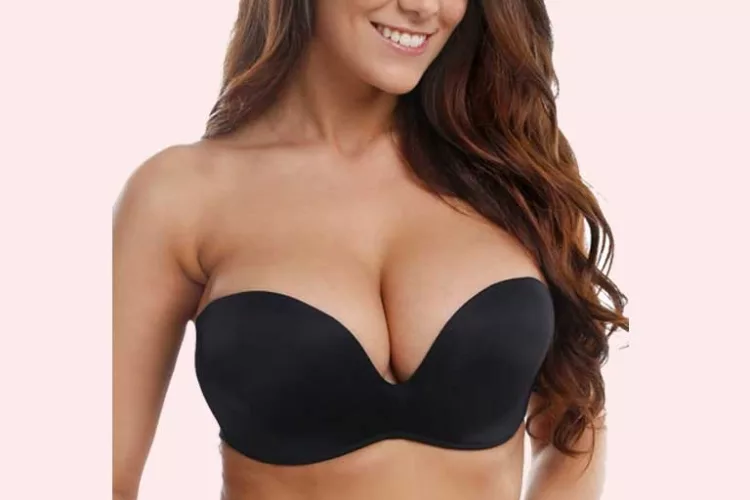
How to Keep a Strapless Bra Up: A Step-by-Step Approach
These steps work whether you're buying a new strapless bra or trying to get more out of one you already own. Work through them in order — each one builds on the last.
Start With the Right Size
Sizing is the foundation. Most people wear a band that's too large and cups that are too small. For strapless bras, correcting this is non-negotiable.
Go down one band size from your regular bra and up one cup size to compensate — this is called sister sizing. If you normally wear a 36B, try a 34C in strapless styles. The cup volume stays the same, but the tighter band gives you the grip you need. You should be able to fit two fingers underneath the band. No more than that.
If you've never properly measured yourself, it's worth doing before your next purchase. This guide on how to measure your bra size at home walks you through three simple steps that take under five minutes and will change how every bra fits going forward.
Prep Your Skin Before You Put It On
Friction is what keeps a strapless bra in place. Smooth, freshly moisturized skin is the enemy of friction. Here's how to set up your skin correctly:
- Skip the body lotion on your torso the morning you'll wear a strapless bra. Apply moisturizer the night before instead.
- Dust translucent setting powder or cornstarch around your ribcage to absorb moisture and increase grip.
- Apply a small amount of antiperspirant to your upper ribcage, where the band will sit. Do this the night before for best results.
Pro tip: A strip of double-sided fashion tape applied along the top edge of your bra cup — between the fabric and your skin — stops the cups from rolling down and is one of the most reliable tools in your kit.
Secure It the Right Way
How you put the bra on matters. Lean forward slightly as you fasten it — this positions the underwire correctly under your breast tissue rather than on top of it. Stand up and adjust so your breast tissue sits fully inside the cups with no spillage at the sides or top. Lift the cups slightly upward before smoothing the band flat. The band should run parallel to the floor, not angling down in the front or riding up in the back.
Long-Term Habits That Keep Your Bra Working
What you do between wearings has as much impact on performance as what you do when you're actually wearing the bra. These habits preserve the band tension and grip that keep your strapless bra functional over time.
Rotate and Rest Your Bras
Elastic needs time to recover after being stretched. Wearing the same bra two days in a row doesn't give it that chance. Give each strapless bra at least 24 hours of rest between wears. This is especially critical for strapless styles, where the band is under more constant tension than in a regular bra.
Rotating between two or three strapless bras extends the life of each one significantly. A single bra worn constantly loses elasticity fast. Three bras shared evenly can each last much longer.
Wash and Store With Care
Machine washing damages the silicone grip strips and elastic that make strapless bras work. Always hand wash in cool water with a gentle lingerie detergent. Lay flat to dry — never tumble dry. Heat is the fastest way to destroy elastic, and once it's gone, no amount of careful wearing will bring it back.
Store your strapless bras flat or nested inside each other with cups stacked. Don't fold the underwire — repeated folding weakens it and causes it to break through the fabric. Keep them in a dedicated drawer where they won't get crushed under heavier items.
When a Strapless Bra Works — and When to Skip It
A strapless bra isn't always the right choice, even when your outfit seems to require one. Recognizing its limits saves you discomfort and gives you the chance to use a better tool for the job.
Best Occasions for Strapless
Strapless bras genuinely perform well in these situations:
- Formal events with limited vigorous movement — weddings, dinners, galas
- Off-shoulder or strapless dresses where the garment itself provides compression
- Cooler indoor environments where sweat isn't a factor
- Smaller to medium cup sizes where the band has less weight to support
When Another Style Serves You Better
Some situations push a strapless bra past what it can reasonably do. In those cases, consider a convertible bra, a silicone adhesive bra, or a bralette as an alternative:
- Events involving dancing, running, or sustained active movement
- Hot and humid conditions where sweat eliminates band grip
- Cup sizes D and above, where the band alone can't adequately support the weight
- Full workdays — strapless bras are better suited to events than eight-hour daily wear
| Situation | Strapless Bra? | Better Alternative |
|---|---|---|
| Wedding or formal dinner | Good choice with correct fit | — |
| Dancing or active movement | Not recommended | Convertible or halter bra |
| Hot outdoor event | Risky — sweat kills grip | Silicone adhesive bra |
| Cup size D and above | Needs heavy-duty style with boning | Full-coverage strapless with boning |
| Full workday wear | Not ideal for extended hours | Regular bra with clear straps |
| Off-shoulder dress | Excellent — garment adds compression | — |
Troubleshooting: Why It's Still Sliding
You've sized down, prepped your skin, and put the bra on correctly — and it's still falling. Here's how to diagnose what's actually going wrong.
Band Problems
If your bra slides down from the bottom, the band is too loose. Test it by putting the bra on backward — band in front, cups behind. If the band gaps or doesn't make full contact with your ribcage, it's too large. Go down another size.
Also check which hook you're using. A new bra should fasten on the loosest hook, with room to tighten as the elastic relaxes over time. If you're on the tightest hook and it's still loose, the bra has passed its useful life. Replace it. For help navigating fit if you've always found bra sizing tricky, the guide on bras for small breasts covers sizing principles that apply broadly across body types.
Cup Fit Problems
If the bra rolls down from the top, the cups are almost certainly too small. Breast tissue that overflows the cup pushes forward and downward, taking the whole bra with it. Try going up a cup size while going down a band size to keep the volume consistent.
Also check underwire placement. The wire should sit flat against your ribcage in the crease beneath your breast — not floating on breast tissue. If it's sitting on tissue, the cups are too small. Correct underwire placement is one of the clearest signals of whether your size is right.
For anyone navigating bra fit after breast surgery, the guide on the best bra after breast augmentation addresses many of the same structural fit questions in useful detail.
Real-World Scenarios and What Actually Works
Knowing the principles is one thing. Knowing what to actually do in a specific situation is another. Here are the two most common high-stakes scenarios and the exact approach that works for each.
Formal Events
For weddings, galas, or any event where you'll be on your feet and photographed, preparation in advance is everything. Choose a bra with vertical boning — internal seams that create structure inside the cup. These prevent the cups from collapsing under movement.
Apply fashion tape along the top edge of each cup before you get dressed. Pack a small roll in your bag for mid-event repairs. If your dress has built-in boning or a corset structure, it contributes to holding the bra in place — lean into that.
Active and Outdoor Days
For events with movement — outdoor festivals, sightseeing trips, casual celebrations — go with a wide-band strapless style with three or more hook-and-eye closures. More hooks create more anchor points across your back and distribute tension more evenly.
Apply antiperspirant to your ribcage the night before. On the day, use the translucent powder trick. A silicone adhesive bra is worth considering if heat and activity will be significant factors — it attaches directly to your skin and removes the band variable entirely.
Frequently Asked Questions
How tight should a strapless bra band be?
The band should be snug enough that you can fit exactly two fingers underneath it — no more. When it's on, it should stay parallel to the floor without riding up in the back. If it rides up, the band is too loose. A proper strapless band feels noticeably firmer than a regular bra band of the same measurement.
Does skin type affect how well a strapless bra stays up?
It does. Dry skin creates more friction with silicone grip strips than smooth or oily skin. Freshly moisturized skin is particularly slippery. On days you'll wear a strapless bra, skip body lotion on your torso or apply it the night before. A dusting of translucent powder around the ribcage increases grip significantly.
Why does my strapless bra keep rolling down at the bottom?
Rolling at the bottom almost always points to a band that's too loose. The band isn't gripping your ribcage firmly enough to stay put. Try going down a band size. Also inspect the silicone grip strips on the inside of the band — if they've worn smooth from machine washing, they can't do their job. The bra may need replacing.
Can fashion tape actually hold a strapless bra in place?
Fashion tape works best as a supplement to a well-fitted bra, not as a substitute for one. Applied along the top cup edge where it meets your skin, it prevents the cups from rolling down. It won't fix a band that's too loose, but it adds meaningful stability at the top, especially during movement.
How do I know when my strapless bra needs to be replaced?
Replace it when the band no longer feels snug on the tightest hook, when the silicone grip strips feel smooth instead of grippy, or when the underwire has shifted or started to poke through the fabric. With regular wear and proper hand-washing, most strapless bras last six to twelve months. Infrequently worn and carefully stored bras can last longer.
Is a strapless bra suitable for larger cup sizes?
It can work, but you need a style specifically designed for larger cup sizes — one with wider bands, multiple hooks, underwire support, and internal boning. Standard strapless styles are typically engineered for smaller cup sizes and won't provide adequate support above a C or D cup. Look for styles marketed explicitly for fuller busts, and be prepared to size down aggressively in the band.
A strapless bra that stays up isn't magic — it's the right size, treated the right way, every single time.



About Paulette Leaphart
Paulette Leaphart is a breast cancer awareness advocate and writer whose personal journey through diagnosis, treatment, and recovery shapes everything published on this platform. After experiencing the physical and emotional toll of breast cancer firsthand, she dedicated herself to creating a space where women can find honest information, community, and encouragement — covering beauty and personal care for people navigating treatment, fashion and style resources for survivors, and wellness content rooted in real lived experience rather than clinical distance.
About the Author

It's me Emily MacKenzie tried to make a documentary film about breast cancer according to the experience of Paulette Leaphart. Now it is no longer possible for some reason. But I'm not disappointed and I'm very hopeful that I can do something very positive that brings awareness to the women of the devastating disease ''Breast cancer". Just stay with me and keep supporting this platform; you will get update time to time and can know everything about ''Breast Cancer''.
You can get FREE Gifts. Or latest Free phones here.
Disable Ad block to reveal all the info. Once done, hit a button below