Standing in front of your closet on a chilly morning, you've probably grabbed whatever felt warmest without thinking twice. You pulled it over your head, called it good, and walked out the door. But if you've ever stopped to wonder about the difference between sweater and sweatshirt — which one actually looks polished, which one handles cold better, and which one deserves a permanent spot in your wardrobe — this guide is for you. It's the kind of question that shapes how you dress every single day.

Both garments sit in the same part of your closet, fight off the same cold air, and cover the same stretch of your torso. That's about where the overlap ends. The fabrics are different, the construction is different, and the occasions each one is built for couldn't be further apart. Knowing which one to reach for — and why — is the difference between looking intentional and looking like you just woke up.
Whether you're rebuilding your wardrobe after a major life change or simply trying to make smarter clothing choices, understanding these two staples gives you a real edge. Let's get into it.
Contents
- The Origins of Two Wardrobe Staples
- The Difference Between Sweater and Sweatshirt at a Glance
- Fabric and Construction: What Actually Sets Them Apart
- Casual vs. Polished: When Each One Belongs
- Pros and Cons of Each Garment
- Quick Wins: Styling Each One Smarter
- Building a Wardrobe That Goes the Distance
- Frequently Asked Questions
The Origins of Two Wardrobe Staples
Where the Sweater Comes From
The sweater has roots that stretch back centuries. Fishermen and sailors along the British Isles — particularly in places like the Aran Islands of Ireland — knitted dense wool garments to withstand brutal sea winds and driving rain. The word "sweater" itself entered popular use in the late 19th century, referring to a garment worn during athletic training to induce perspiration. According to Wikipedia's entry on sweaters, the modern sweater evolved from these functional roots into a fashion staple worn across all social classes by the mid-20th century. What started as workwear for people who needed warmth in extreme conditions became a versatile piece that moves comfortably from a fireplace gathering to a business casual office without missing a beat.
How the Sweatshirt Was Born
The sweatshirt's story is much younger — and far more American. Benjamin Russell Jr. invented the sweatshirt around 1926, replacing the scratchy wool jerseys worn by football players at the University of Alabama. His design used soft, absorbent cotton fleece — far more comfortable against skin during intense physical activity. The garment spread quickly through athletic programs and eventually hit mainstream culture in the 1970s and 80s, fueled by sportswear brands and collegiate fashion. Today it's one of the most universally worn garments on earth, crossing every age group, gender, and income level with ease.
The Difference Between Sweater and Sweatshirt at a Glance
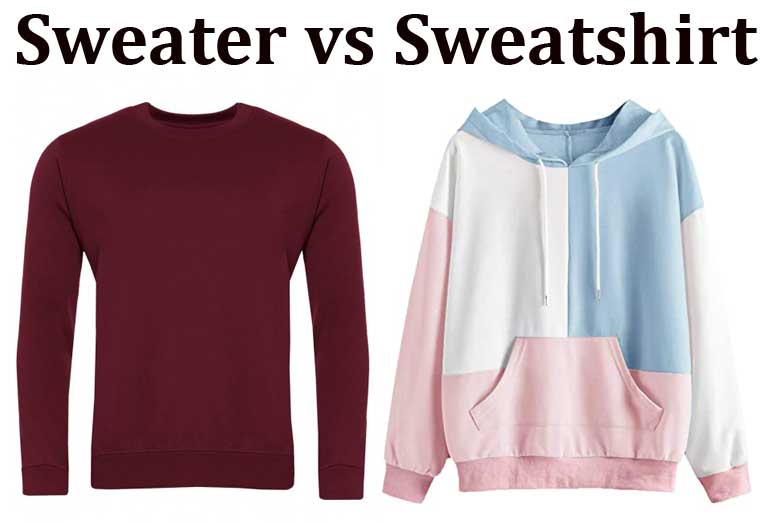
When you line them up side by side, the difference between sweater and sweatshirt becomes immediately clear — but most people have never actually done that comparison. One is knitted. One is cut and sewn. One breathes and moves with your body in a structured way. The other wraps you in softness with almost zero structure. Each serves a distinct purpose, and knowing which one does what prevents you from wearing the wrong thing to the wrong moment.
Side-by-Side Comparison
| Feature | Sweater | Sweatshirt |
|---|---|---|
| Construction | Knitted (interlocking loops of yarn) | Cut and sewn from jersey or fleece fabric |
| Common Materials | Wool, cashmere, cotton, acrylic | Cotton fleece, polyester blend |
| Formality Level | Casual to business casual | Casual to athleisure |
| Warmth Type | Insulating (air trapped in knit structure) | Moisture-wicking, soft warmth |
| Texture | Structured, visible stitch pattern | Smooth exterior, brushed soft interior |
| Typical Necklines | V-neck, crew, turtleneck, cardigan | Crew neck, hoodie |
| Best For | Layering, semi-formal and casual settings | Workouts, lounging, relaxed days |
| Care Requirements | Often hand wash or dry clean | Usually fully machine washable |
Fabric and Construction: What Actually Sets Them Apart
What Sweaters Are Made Of
A sweater is knitted — meaning yarn is looped together in a continuous interlocking pattern, creating a fabric with natural stretch and visible texture. The material varies widely: wool and cashmere are the warmest and most luxurious options, while cotton sweaters work well for milder weather. Acrylic blends bring the price down considerably while mimicking the look of natural fibers. Because of the open knit structure, sweaters breathe differently than woven fabrics — air circulates through the loops, which is why a good wool sweater can keep you warm without making you feel trapped. The trade-off is care: many sweaters require hand washing or dry cleaning to hold their shape, especially natural fiber versions that respond poorly to heat and agitation.
What Sweatshirts Are Made Of
Sweatshirts are made from fleece — typically a cotton-polyester blend that's soft on the inside and relatively smooth on the outside. The interior is brushed during manufacturing to create that familiar cozy texture. This construction makes sweatshirts excellent at trapping body heat while absorbing moisture, which is why they became athletic staples first. The panels are cut from flat fabric and sewn together, exactly like a T-shirt, which means there's no stretch or give built into the weave itself. Most sweatshirts are fully machine washable, making them low-maintenance compared to delicate sweaters. Just as knowing how to shrink a swimsuit before tossing it in the dryer saves you from a ruined piece, understanding how sweatshirt fleece responds to high heat protects your favorites from accidental shrinkage.
Casual vs. Polished: When Each One Belongs
Occasions That Call for a Sweater
A sweater naturally elevates an outfit. Pair a fine-knit wool sweater with tailored trousers and you're ready for brunch or a casual office presentation without a second thought. Cardigans layer cleanly over blouses and button-downs, making them a practical choice for professional settings where temperatures swing between a cold conference room and a warm lobby. The textured surface of a knit adds visual interest that a sweatshirt simply can't replicate. If you already think carefully about what sits underneath your layers — like finding the right bra for comfort and support under form-fitting tops — a sweater rewards that attention to detail with a finished look that holds up all day.
When to Reach for the Sweatshirt
Sweatshirts own the comfortable, relaxed end of the style spectrum. Running errands, working from home, hitting the gym, traveling — the sweatshirt handles all of it without complaint. It's a garment built for movement and ease. The hoodie variation adds real practicality in changing weather, giving you coverage without needing to carry an extra layer. For a day spent mostly outdoors or a casual outing where comfort takes priority over polish, the sweatshirt wins every time. The key is wearing it with intention: a well-fitted sweatshirt in a neutral color looks put-together in ways a baggy, faded one simply doesn't.
Pros and Cons of Each Garment
The Sweater Case
Sweaters bring a versatility that earns them a permanent place in any wardrobe. They transition across seasons, layer well, and communicate a level of effort that elevates your overall look. The downside is real, though: quality sweaters require more care and cost more upfront. Pilling is a common issue with lower-grade yarns, and natural fiber sweaters can shrink or lose their shape if washed incorrectly. For special pieces, dry cleaning adds up over time. Still, a well-made merino wool or cashmere sweater outlasts ten fast-fashion alternatives — and the difference in appearance is obvious the moment you put it on.
The Sweatshirt Case
Sweatshirts are democratic in the best sense. They're affordable, durable, machine-washable, and comfortable in a way that requires zero effort. The drawback is that they carry an inherent casual signal — wearing one to a semi-formal event or a business meeting reads as underdressed, regardless of how expensive the sweatshirt actually is. For anyone navigating a wardrobe that needs to cover multiple contexts — the kind of practical, body-confident dressing explored throughout wellness and lifestyle — a sweatshirt anchors the casual end of the spectrum but can't cover the middle ground the way a sweater can.
Quick Wins: Styling Each One Smarter
Elevating Your Sweater Outfits
A few small adjustments take a sweater from basic to intentional. Tuck the front hem into high-waisted pants to define your waist without looking too formal. Layer a collared shirt underneath for a preppy look that works in almost any setting. Choose a fitted silhouette over a shapeless one — oversized is fine when done deliberately, but accidental bagginess reads as careless. Dark wash jeans or tailored trousers extend a sweater's range into business casual territory instantly. If body confidence is part of your daily styling equation — and it's worth pairing smart choices like the right bralette or bra underneath fitted knits — you'll feel as good as you look all day long.
Making a Sweatshirt Look Intentional
Fit is everything with a sweatshirt. A slightly oversized crew neck over slim-fit pants or leggings strikes the right balance between comfort and proportion. White sneakers or clean leather shoes immediately pull the look upward on the formality scale. Layering a structured coat or blazer over a simple sweatshirt creates a compelling contrast that fashion-forward dressers have been using for decades. Stick to solid colors or minimal branding when you want the sweatshirt to work harder stylistically — a logo-heavy piece narrows your options significantly. Proportional dressing also matters here: the same logic that guides choosing the best shorts for your body type applies to every piece in your wardrobe.
Building a Wardrobe That Goes the Distance
Which One Is the Better Investment
If you're deciding where to spend money and where to save it, the answer is straightforward: invest in sweaters, spend modestly on sweatshirts. A quality sweater — merino wool, cashmere, or a fine cotton knit — holds its shape, improves with proper care, and stays relevant across years of shifting trends. A $150 merino sweater worn 100 times costs less per wear than a $30 fast-fashion piece that pills after five washes. Sweatshirts, on the other hand, are inherently casualwear. Spending a moderate amount on two or three well-fitted options in neutral colors gives you everything you need without diminishing returns. Buy one or two sweatshirts you love — not ten that feel okay.
Fitting Both Into a Capsule Wardrobe
A practical capsule wardrobe includes both — but in different ratios. Three to four quality sweaters (a V-neck, a crew neck, a cardigan, and a turtleneck) cover almost every cool-weather scenario from a casual brunch to a low-key board meeting. Two to three sweatshirts handle everything casual: weekend errands, travel days, lounging at home. The overlap between the two is minimal, which means they don't compete in your closet — they complement each other. Think about it the way you'd approach any other carefully chosen collection. Finding the right swimsuit for confidence and comfort follows the same principle: the goal is intentionality, not volume. Fewer pieces that actually fit your life will always outperform a crowded closet full of items you second-guess every morning.
Frequently Asked Questions
Is a sweatshirt considered a sweater?
No. While both are upper-body garments worn for warmth, a sweatshirt is sewn from fleece fabric while a sweater is knitted from yarn. They have different constructions, textures, and formality levels — which is the core of the difference between sweater and sweatshirt. The two terms are not interchangeable.
Which is warmer — a sweater or a sweatshirt?
It depends on the specific materials. A thick wool or cashmere sweater provides excellent insulating warmth because the knit loops trap air effectively close to your body. However, a heavyweight fleece sweatshirt can match or exceed a thin cotton sweater in warmth. For seriously cold conditions, a quality wool or cashmere sweater is usually the stronger choice.
Can you wear a sweater to the gym?
Not ideally. Sweaters don't manage moisture well and can feel restrictive during movement. Sweatshirts — especially those made from moisture-wicking cotton-poly blends — are designed for physical activity. A light cotton sweatshirt is far better suited for a warm-up or cool-down than any knit sweater, which will absorb sweat and feel heavy quickly.
How do you care for a wool sweater without shrinking it?
Hand wash in cool water with a gentle wool-safe detergent, or use your machine's delicate cycle inside a mesh laundry bag. Always lay flat to dry — never hang a wet sweater, as the weight of the water will pull it out of shape. Avoid the dryer entirely for natural fiber sweaters, as heat causes irreversible shrinkage.
Are sweatshirts appropriate for business casual settings?
Generally, no. Even a premium sweatshirt reads as too casual for most business casual environments. A fine-knit sweater in a solid, neutral color is the correct choice when you need warmth without sacrificing professionalism. Save the sweatshirt for remote work days, weekends, and casual social settings where comfort is the primary goal.
What is the difference between a hoodie and a sweatshirt?
A hoodie is a specific type of sweatshirt with an attached hood and typically a front zipper or kangaroo pocket. A sweatshirt is the broader category — all hoodies are sweatshirts, but not all sweatshirts are hoodies. The core fabric, construction, and casualwear positioning are the same across both variations.
The difference between a sweater and a sweatshirt is really the difference between dressing with intention and dressing out of habit — and once you know it, you can't unknow it.



About Paulette Leaphart
Paulette Leaphart is a breast cancer awareness advocate and writer whose personal journey through diagnosis, treatment, and recovery shapes everything published on this platform. After experiencing the physical and emotional toll of breast cancer firsthand, she dedicated herself to creating a space where women can find honest information, community, and encouragement — covering beauty and personal care for people navigating treatment, fashion and style resources for survivors, and wellness content rooted in real lived experience rather than clinical distance.
About the Author

It's me Emily MacKenzie tried to make a documentary film about breast cancer according to the experience of Paulette Leaphart. Now it is no longer possible for some reason. But I'm not disappointed and I'm very hopeful that I can do something very positive that brings awareness to the women of the devastating disease ''Breast cancer". Just stay with me and keep supporting this platform; you will get update time to time and can know everything about ''Breast Cancer''.
You can get FREE Gifts. Or latest Free phones here.
Disable Ad block to reveal all the info. Once done, hit a button below